Living between side effects and survival
This piece contains discussion of chronic pain, medication changes and side effects, hospital admissions, and the emotional toll of navigating long-term illness and healthcare systems. Please take care while reading, and step away if you need to. This piece contains discussion of chronic pain, medication changes and side effects, hospital admissions, and the emotional toll of navigating long-term illness and healthcare systems. Please take care while reading, and step away if you need to.
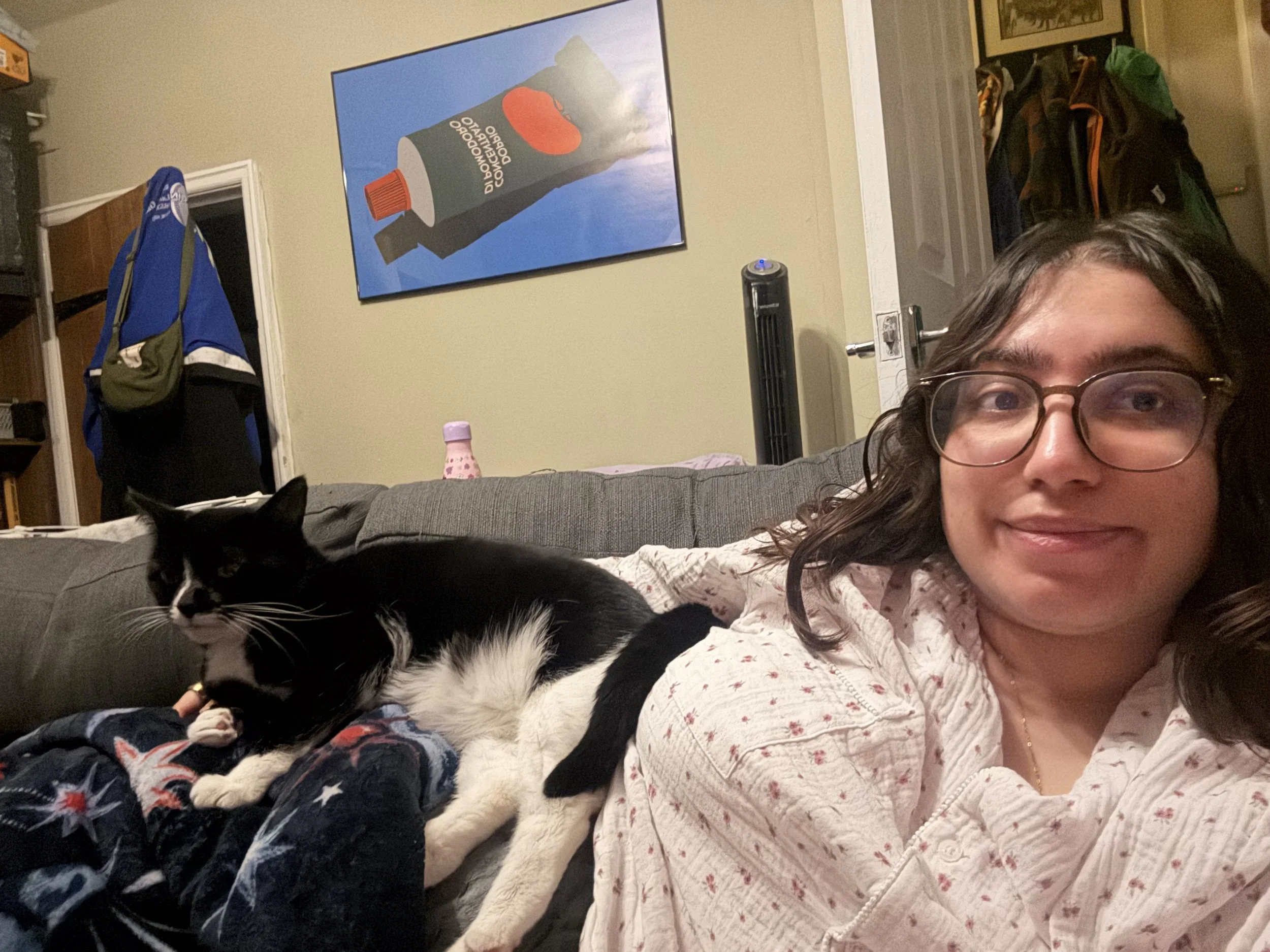
An accurate representation of how many of my days are spent
What no one tells you about medication changes
Dizziness, nausea, constipation, diarrhoea, dry mouth, fatigue, drowsiness and the list could go on for miles.
I start here as someone who has gone on and off upwards of 20 different medications and doses in the last year, and recently came off a big drug.
It is downplayed how much coming off, going onto or switching medication can do to the body.
In the last month, I have made a significant change coming off the first of five migraine preventative drugs to actually work. The drug that made it possible to read again and enjoy music and media again. It was the reason I was able to write and create again.
It wasn’t a decision taken lightly. The drug was a driver behind chronic constipation and could be causing pain amplification. I had to try stopping it to see if my health would improve.
Whilst experiencing the effects of that stopping, I am trying to manage the new drug and hoping it aids rather than hinders me.
CGRP, who is she?
Ajovy. The drug hailed as what would be the saviour for my migraines, but led to severe chronic constipation and likely amplification of some pain. The drug inhibits CGRP, which is released during a migraine attack, but also has an important function in our gastrointestinal and menstrual systems, and more.
This drug likely amplified as well as suppressed some endometriosis symptoms. The extent is not widely known and research into these drugs is taking place, as people with endometriosis have higher CGRP.
I would like to explore this further because it wasn’t something I was fully aware of before starting the drug. I didn’t consider the extent it would affect my endometriosis or dysautonomia. There isn’t enough information because people like me are not studied. We have too many variables.
Living in an escalating body
In the three months I have been off Ajovy there has been improvement in my digestion, I am no longer chronically constipated and small improvement in leg pain. This has been a really big win as I don’t need laxatives regularly and the pain in my leg is becoming clearer that it is amplified pain from my pelvis, likely nerve related.
However, the pelvic pain is a lot worse, my bladder symptoms continue to cyclically increase in baseline severity. They now wake me up to 5 times a night and require morphine to subside the pelvic flare, even though it can worsen bladder symptoms. I have nothing left at my personal disposal.
I constantly feel like my pelvis is being crushed. There’s barbed wire wrapped around my left side going across my abdomen and all the way around my pelvis. It tightens as I breathe and all I can hope for is the heat to burn it away.
As someone with a dysfunctional autonomic nervous system [still waiting almost 18 months to find out what] these medication changes have led my body to on the fritz. Walking up the stairs leaves me breathless and overheated, going for a bowel movement makes me feel faint and I become so exhausted I can’t string a sentence together.
The fatigue from this is relentless. Lately, it doesn’t take much to tire me out and now it flatlines me to the point I can barely hold a conversation because my body is under too much strain.
The cost of pushing through
Mentally it's a weird place to be in again. In limbo waiting for more investigations, which will probably say everything is fine. Yet, doing the dishwasher, light tidying, making my own dinner and a bowel movement had me in so much pain and so fatigued I couldn’t speak.
I push myself to do normal things and I keep running into the ground. I can’t out-move a body that is already in severe pain from basic bodily functions. I can’t avoid urinating and opening my bowels.
I am scared of going back to work, not because I can’t do my job but because little has changed and I know I will push through severe pain. I have been doing it for over almost a year. I have worked through three hours of sleep and on a hell of a lot of morphine, only stopping when I nearly fell over in my living room because I was so dizzy.
Living with chronic health conditions means you learn to push through and mask immense physical and mental pain. I have done it to the point I have zero energy for life outside of work. From napping during lunch breaks and feeling like a zombie at the end of the day, zoning out in social situations and becoming reclusive on the weekends to conserve energy to work again.
My fear is I don’t recognise this when it is happening until it’s too late and I crash and end up in the hospital because the pain is more than I can handle at home. I am blind to the warning signs: messing up my medication boxes, blurry vision and difficulty concentrating at work, making silly mistake after mistake, sleeping through lunch instead of eating, and only showering on days off in between because the thought of washing is overwhelming. I become quiet and more irritable because I am so overstimulated.
“The too late” looks like a breakdown and another extended period of being unable to work. Hospital trips and specialist appointments where every doctor tells me I need to see a pain specialist, but no one can make that happen. The pain physio says the consultants take ages to see so see the pharmacist instead. Then seems shocked when I ask to be referred back again because I am taking morphine daily and ending up in hospital every other month when my flares push me into so much pain my body shakes.
Then its “ask your GP to write,” when they have and so has gynaecology. Still nothing happens. So now I am paying privately, just to try and reclaim a semblance of a life.
The NHS-Private Healthcare loop: When the medical system fails you repeatedly does paying mean you are heard
My family, partner and I have probably spent £10,000 if not more on private appointments, surgery and scans. It is only through PIP and the backpay I received I have been able to contribute in the last three months. Before that,I was forcing myself through three days a week of work to earn a grand that went to bills and health costs.
That included taxis to appointments because public transport is not accessible for me, vitamins to combat a variety of symptoms and electrolytes to manage dysautonomia. These are not luxuries, but necessities when your body no longer functions reliably.
I’m afraid I will never get answers but more and more medication band aids to manage symptoms. That the curiosity to find out why isn’t there, and instead focus on treating individual symptoms in isolation leaving me on lots of drugs. This is frightening because what if those methods fail? What happens when it becomes more medications, more tests, more side effects and still no understanding?
Sometimes it feels less like healthcare and more like being passed from one experiment to the next. At this point, I care less about the who and the what, and more about the how and the when: how can I function and when can I start to feel more like myself again?
Back to medications and side effects, all of this trial this blindly so far has been relentlessly taxing on my body. I’m exhausted from having to “test” drugs while also trying to be a person. Having to manage severe nausea by taking two types of antisickness so I can drink my electrolytes so I don’t feel dizzy and unstable.
Other times, the side effects are so severe that I’m left with diarrhoea to the point I can’t keep water down. I become bedbound, waiting for the drug to wear off so I can rehydrate and begin again. There is no recovery time built into this process.
While writing this blog, I heard back that my referral to see a pain consultant - made by my gynaecology team - had been rejected. I was told that I was already under their care and did not need an appointment because my treatment is “ongoing”. That treatment being the pain physiotherapist says there is little for them to do and pelvic physiotherapy is my best option now.
I was instead encouraged to see the pain pharmacist, whom I’ve only seen once. I requested a follow-up appointment back in November, after a three-day hospital admission in October and an increasing reliance on morphine. I’m still waiting.
This route was actively encouraged because I was told it takes a long time to see a pain consultant, and that the pharmacist would be a more realistic option. But after multiple doctors have agreed I need pain support, I’m still unable to access it in practice.
This lack of access after multiple doctors have suggested I need it is what has pushed me to book a private pain consultation which is next week.
And when paying privately becomes the only way forward, it raises an uncomfortable question: am I being heard because my needs are urgent or because I can afford to ask again? And even then, paying doesn’t always guarantee this.
The quiet grief of falling behind
It's been really hard for me to even face this blog or Instagram. Every time I am met with a sense of inadequacy. I am not where I thought I would be now.
I wish I had more energy to create and share the bank of post and blog ideas I have. I wanted to be more involved in the community, but I am limited by my ability to leave my house and travel independently without it becoming unsafe for me.
I struggle to want to share anything because the negative has outweighed the positive for so long. Unread messages leave me paralysed with anxiety and as the notifications build, it becomes daunting to reapproach.
One thing that has been positive is that I really see and feel the benefits of the therapy I did last year. The last gynaecology appointment I felt grounded and in control. I could speak confidently and assured in my position even if it was not fully aligned with the doctor, I didn’t allow myself to be rushed, dismissed or pushed into treatment that I didn’t feel was right. It felt collaborative, which is what healthcare should be.
This continued into the neurology and urology, and I hope it feeds into the next pain consultant next week despite the really mentally scarring one previously (see previous blog).
It’s just a spark, but it's enough to keep me going
Still amongst this I try to keep living some type of normal. Doing the dishwasher as my small contribution to household chores, getting out with my rollator as much as I can. Bracing through the pain and staying gently social so my brain doesn’t go back into the dark hole of depression.
So I have purple glittery magnesium baths, colour and virtual chats with my fellow disabled friends and try to open up and find myself again.
This closing section is inspired by my favourite Paramore song ‘Last Hope.’ It’s always carried me through challenging times in my life.
Sometimes, it just takes one small thing to keep me going.
Resources:
https://hms.harvard.edu/news/could-migraine-drugs-help-treat-endometriosis
https://pubmed.ncbi.nlm.nih.gov/38658933/